English



WILDEN APPLICATION GUIDE
WILDEN Pumps for Ceramic Slip and Glaze
A ceramic slurry can wear components while also settling during a shutdown. Record solids size and concentration, but also note how rapidly the mixture separates. Evaluate consistency of delivery together with wear life rather than choosing the highest available cycle rate.

Typical transfer duty
Ceramic slip, glaze and abrasive suspended-solid fluids
Preparation tank → Slip or glaze transfer → Mould or process
What to evaluate
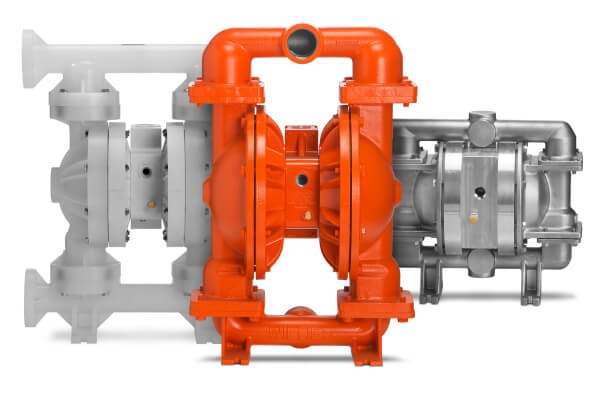
Compare Pro-Flo SHIFT or other suitable WILDEN configurations using the real viscosity and operating point. Diaphragms, balls and seats all contribute to service life in abrasive duties.
Selection checklist
Document solids and chemical additives
Review the restart procedure after settling
Trend output against cycle rate and wear
Operating boundary
Do not treat all abrasive slurries as equivalent. Select elastomers for the combined chemical, temperature and wear demands, and confirm limits with the exact model documentation.
Maintenance and spare parts
Keep the complete WILDEN model code, installed diaphragm material and air distribution system in the maintenance record. Confirm air-kit and wet-kit compatibility separately. Follow the model-specific engineering, operation and maintenance manual for isolation, inspection, fastener torque and reassembly; a generic parts list is not a repair procedure.
Discuss your application
Send the fluid composition, concentration, temperature, viscosity, solids information, target flow, backpressure, suction conditions and available air supply. These details allow a meaningful configuration review and a matching spare-parts recommendation.
Explore WILDEN pumps · Repair kits · Request selection support
Editorial application guidance by Willee. Reference: Wilden Ceramics. This page describes an application, not a customer installation or a guaranteed operating result.