English



WILDEN APPLICATION GUIDE
WILDEN Pumps for Chemical Transfer
Confirm the complete fluid composition, concentration and temperature before choosing a WILDEN pump. A housing that tolerates the base chemical may not tolerate an additive, cleaning fluid or elevated operating temperature. Review the whole wetted assembly rather than selecting by diaphragm material alone.

Typical transfer duty
Acids, alkalis, solvents and process polymers
Chemical storage → Transfer duty → Process vessel
What to evaluate
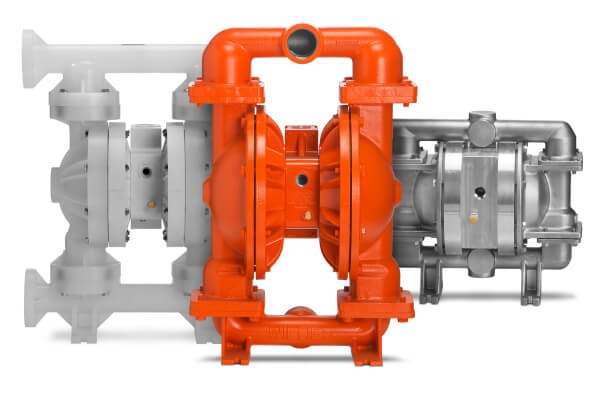
A bolted metal or plastic Pro-Flo SHIFT configuration can be evaluated where containment and air use are priorities. The choice between metal, polypropylene and PVDF remains application-specific.
Selection checklist
List every wetted material
Separate normal operation from cleaning conditions
Review exhaust routing for a possible diaphragm failure
Operating boundary
A chemical resistance rating is a screening tool, not approval for an unreviewed chemical mixture. Never assume that air operation by itself makes the complete installation suitable for a hazardous area.
Maintenance and spare parts
Keep the complete WILDEN model code, installed diaphragm material and air distribution system in the maintenance record. Confirm air-kit and wet-kit compatibility separately. Follow the model-specific engineering, operation and maintenance manual for isolation, inspection, fastener torque and reassembly; a generic parts list is not a repair procedure.
Discuss your application
Send the fluid composition, concentration, temperature, viscosity, solids information, target flow, backpressure, suction conditions and available air supply. These details allow a meaningful configuration review and a matching spare-parts recommendation.
Explore WILDEN pumps · Repair kits · Request selection support
Editorial application guidance by Willee. Reference: Wilden Chemical Process. This page describes an application, not a customer installation or a guaranteed operating result.