English



WILDEN APPLICATION GUIDE
WILDEN Pumps for Oil, Glycol and Utility Transfer
Oilfield and energy-site duties need an explicit fluid and area classification. Lubricant transfer, glycol feed and fuel handling are different selections. Include cold-start viscosity, ambient conditions and the actual motive-air arrangement in the inquiry.

Typical transfer duty
Suitable lubricants, glycol and industrial waste streams
Storage or collection → Qualified transfer duty → Process or recovery
What to evaluate
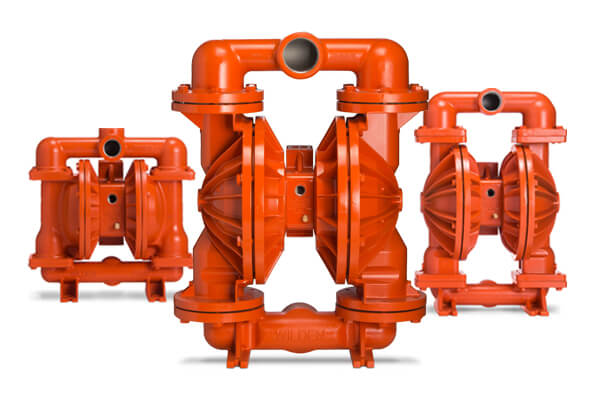
Review the relevant WILDEN industrial or specialty configuration. Fuel or natural-gas-powered applications require their specific documented designs and approvals; do not generalize from a standard compressed-air model.
Selection checklist
Identify fluid and temperature range
Confirm the approved motive gas
Review grounding and exhaust requirements
Operating boundary
Air operation is not a blanket approval for flammable liquids, fuel dispensing or natural gas. Confirm the precise equipment certification and installation requirements before selection.
Maintenance and spare parts
Keep the complete WILDEN model code, installed diaphragm material and air distribution system in the maintenance record. Confirm air-kit and wet-kit compatibility separately. Follow the model-specific engineering, operation and maintenance manual for isolation, inspection, fastener torque and reassembly; a generic parts list is not a repair procedure.
Discuss your application
Send the fluid composition, concentration, temperature, viscosity, solids information, target flow, backpressure, suction conditions and available air supply. These details allow a meaningful configuration review and a matching spare-parts recommendation.
Explore WILDEN pumps · Repair kits · Request selection support
Editorial application guidance by Willee. Reference: Wilden Oil & Gas. This page describes an application, not a customer installation or a guaranteed operating result.